
Hypnosis , this state close to sleep obtained through suggestion maneuvers, has been validated by Inserm (National Institute of Health and Medical Research) in certain therapeutic treatments .
Thus, hypnotherapy aimed at reducing stress or anxiety has proven effective. Similarly, in cases of chronic pain such as migraines or lower back pain, hypnosis is also a possible therapy.
Just like hypnosis , confidence in virtual reality as a therapeutic tool is growing. Numerous studies demonstrate the effectiveness of using virtual reality headsets in treating certain mental health disorders . Phobias , in particular, can now be alleviated, or even cured , through virtual reality.
With advances in our knowledge of hypnosis and virtual reality, it is now possible to combine these two therapeutic tools to treat mental disorders or soothe patients.
Virtual reality and hypnosis: aids to support care.
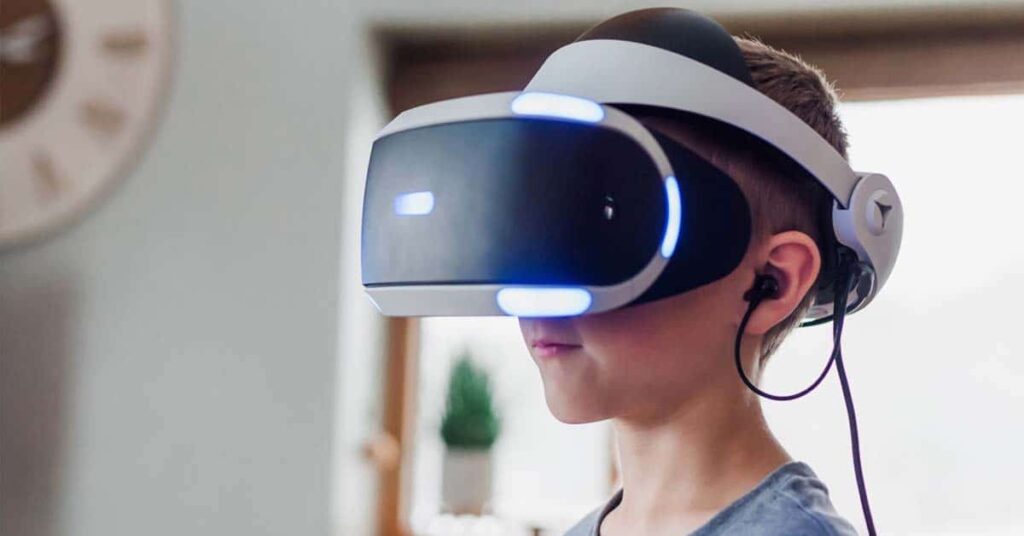
The University Hospitals of Geneva , Switzerland, are actively working on the development of virtual reality and hypnosis. The aim of their work is to provide patients with maximum relief during their treatment . In Geneva, these studies focus on pediatric care . The teams have developed a video game combining virtual reality and hypnosis .
This combination helps relieve children's pain during their treatments . The game adapts to each child, thanks to a tailor-made story.
With virtual reality headsets combined with hypnosis , children are able to overcome the fear and pain associated with certain treatments, without having to take more medication .
Similarly, in France, the Cahors hospital is also developing treatments combining virtual reality and hypnosis . Just as with children, studies conducted by the Cahors hospital demonstrate the effectiveness of these treatments . Indeed, medical hypnosis using virtual reality helps reduce the pain and anxiety caused by certain procedures.
Thus, virtual reality headsets allow for certain procedures considered "invasive" (such as changing dressings on burn victims or performing lumbar punctures). Hypnosis performed via the headsets avoids the need for medication .
The case of hypnotic communication .
Conversational hypnosis is a less well-known technique than "classical" hypnosis. In this specific case, the patient and practitioner interact to find a solution to the patient's psychological distress. During this exchange, the practitioner subtly modifies the unconscious mind or behavior of their interlocutor by communicating with them. In our case, the use of a virtual reality headset facilitates this modification , allowing the patient to focus not on the treatment they are receiving , but on their interaction with the practitioner.
Another hospital and another study, this time in northern France, at the Seclin hospital center . While in Switzerland and Cahors, the focus was on hypnosis and virtual reality to support certain treatments, here the focus is more on the relationship with the operating room.

Indeed, the image of the operating room is a source of anxiety . The same is true for the idea of having surgery or receiving hospital treatment. That's why, in Seclin, one of the solutions to counter this is virtual reality combined with conversational hypnosis .
How does it work?
A headset is placed over the patient's eyes, and codes are established with them so they can describe what they see, hear, and feel. The goal is to make them forget they are in the operating room . Furthermore, a code is established for the patient to use should they wish to stop the experience or if something is bothering them. This avoids an abrupt transition from the headset environment to the reality of the operating room.
Of course, augmented reality and hypnosis are not used during major surgeries or to replace general anesthesia. However, in Seclin, for example, they are used to make the administration of an epidural more tolerable . Other examples could be given where these two tools are used in combination: inserting an IV line or administering regional anesthesia, for instance.
As we have seen, augmented reality and hypnosis are among the tools available to French and Swiss hospitals to combat, or at least alleviate, psychological distress related to patient care. Just as with phobias, augmented reality is also proving effective in nursing homes.


