
Virtual reality is constantly evolving. Its applications are expanding daily, reaching increasingly diverse fields. The latest advancements in this technology are particularly relevant to the area of therapy. More specifically, these advancements focus on therapies designed to treat certain mental health disorders.
The use of virtual reality headsets as an aid in therapeutic treatments is becoming increasingly common. The results of experiments conducted are consistently very promising and encourage further use of this technology. However, virtual reality should be considered a tool to help find the right path toward the most appropriate solution.
But how can virtual reality actually help? That's what we're going to explain through different examples: meditation, phobias, and Alzheimer's disease.
Meditating under a virtual reality headset.
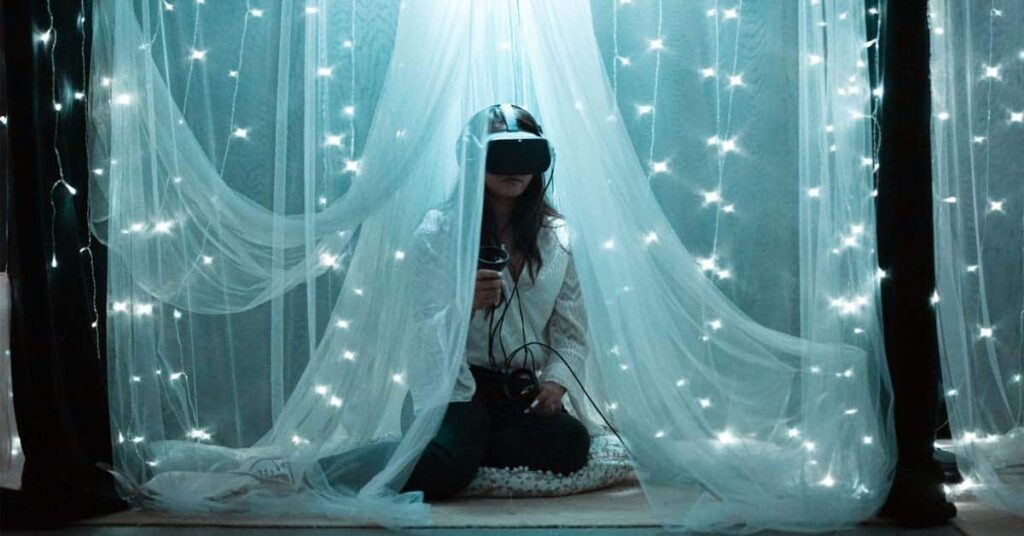
Settle in comfortably, put on a virtual reality headset, and let yourself drift into meditation. This is an activity now offered by many wellness centers.
Transported to a soothing landscape, users can focus entirely on what they see. They concentrate their attention on specific points to allow themselves to meditate. This experience can also be combined with breathing exercises. Whether using an app or with the guidance of a professional, virtual reality meditation is proving its effectiveness.
Both experienced meditators and newcomers alike recommend using virtual reality to add another dimension to their meditation experience. Furthermore, the observed benefits numerous : improved sleep quality , enhanced mental health emotional balance , and reduced sensitivity to stress.
Eye movement is adapting to virtual reality.
Eye movement desensitization and reprocessing therapy.
The patient receives alternating stimulation (right and left) via auditory, visual, and tactile stimuli. They react to these stimuli with eye movements. This therapy is used particularly in the treatment of post-traumatic stress disorder (PTSD). Since June 2007, the French National Authority for Health (HAS) has recommended its use for PTSD, as well as for related conditions (depression, risk of suicide, drug or alcohol addiction, etc.). Along with hypnosis , eye movement is a new area of application for virtual reality in therapeutic settings.
Treating phobias through virtual reality therapy is possible.
A phobia a form of anxiety. A person with a phobia realizes their fear is excessive and irrational, but they cannot resist the urge to avoid the object of their fear. This can sometimes be debilitating.
Thus, in cognitive behavioral therapy , virtual reality can be an extremely valuable tool. The virtual reality headset allows the patient to both recreate the object of their phobia and feel safe, all within a fully immersive experience.
With the guidance of a professional, the gradual use of technology can lead, little by little, to better management of one's phobia. Virtual reality therapies have proven effective in treating arachnophobia.
Researchers at the University of Basel in Switzerland have shown that, between two groups of patients treated for this phobia, the group that received therapy using virtual reality achieved better results. Unlike the second group, the group that used the headsets can now approach a spider in a transparent box.
Virtual reality, a therapy against Alzheimer's.
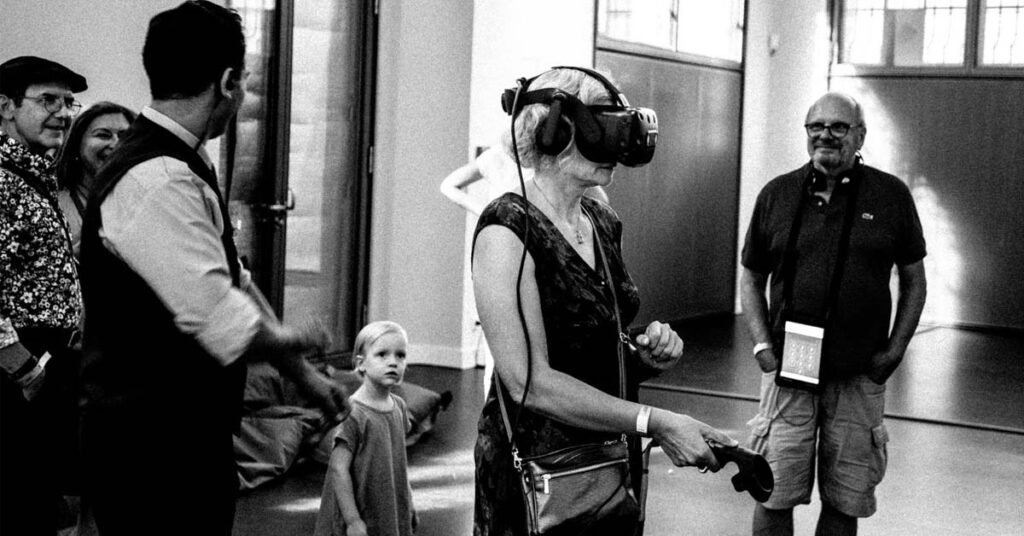
Since 2020, the Nice University Hospital has been testing the use of virtual reality headsets to combat Alzheimer's disease. Patients with mild or moderate symptoms and over the age of 65 are participating in the experiment.
Drawn from two nursing homes in the Nice region, the patients are divided into two groups. The first group sees neutral images (the city of Nice, the beach, etc.) through the headset. The second group receives personalized images, also via the headset, associated with a specific emotion. This type of therapy, called reminiscence therapy , is showing encouraging results for the patients. By 2022, more patients will be enrolled in this virtual reality therapy program.
Whether it's for meditation, treating phobias, or Alzheimer's disease, the desire to use virtual reality as a tool is evident. A growing number of researchers are conducting experiments to demonstrate the effectiveness of this new technology in their therapies.


